
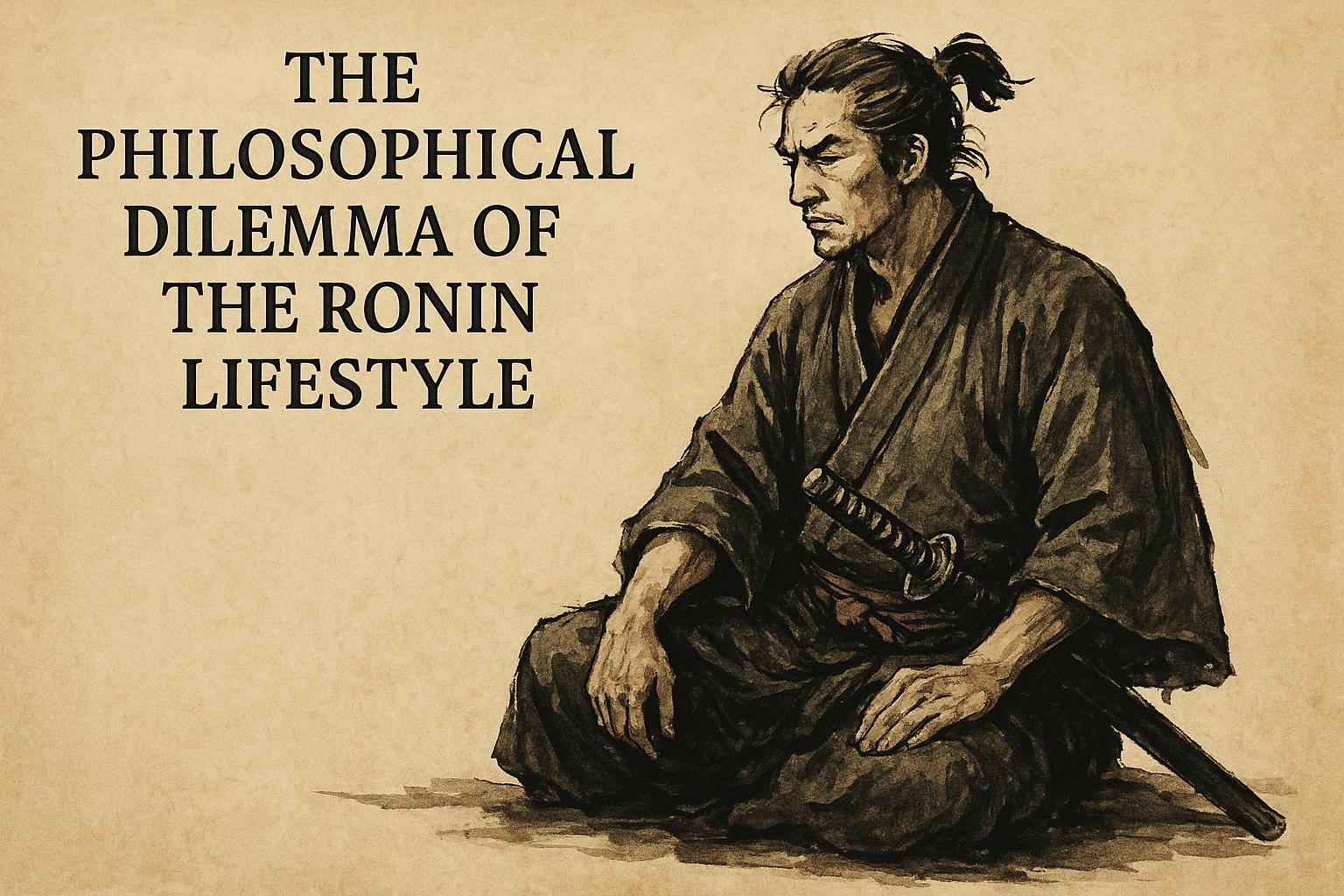
Introduction to the Ronin Lifestyle
The concept of the ronin, a samurai without a master, evokes imagery of independence and freedom. Historically rooted in the Japanese feudal era, these warriors lived a life of autonomy and often drifted between roles within society. Today, the essence of the ronin lifestyle can be interpreted as a philosophical pursuit for personal freedom and self-reliance. Understanding this way of life presents unique philosophical challenges and questions about individuality and societal obligations.
Historical Context of the Ronin
Ronin were samurai warriors who had lost their lord or had been dismissed by them. This state of masterlessness often forced them into a transient life. Some became mercenaries or involved in less honorable activities, while others sought new lords to serve. Over time, their image has transformed from social outcasts to symbols of independence and skill. The role of a ronin historically was not one that conformed to a singular path; rather, it was defined by the quest for survival and relevance in a rigid hierarchical society. The transformation of the ronin’s image over time reflects a broader appreciation of their struggle for autonomy amidst adversity.
The Philosophical Implications
The ronin lifestyle poses an intriguing philosophical dilemma centered around the conflict between individual autonomy and social responsibility. On one hand, independence is celebrated, representing the ultimate form of personal freedom. On the other hand, the lack of alignment with a larger entity or community leads to questions about one’s moral and social obligations.
The Value of Individual Autonomy
Individual autonomy is often regarded as a valuable trait in philosophy, associated with notions of self-determination and freedom from external control. In this context, living as a ronin can be seen as an ultimate assertion of free will. The ronin’s journey can symbolize the pursuit of personal enlightenment and the overcoming of societal limitations. Pursuing such independence often requires a deliberate choice to defy traditional roles and expectations, prioritizing personal objectives and desires over externally imposed duties.
Social Responsibility and Community
However, the ronin’s lifestyle also underscores the importance of belonging and community. Humans are inherently social creatures, and a complete rejection of societal ties can lead to isolation. Philosophers argue that responsibilities to others are core aspects of a fulfilled life. The ronin, thus, represents a tension between personal freedom and ethical duties to others. This tension is not merely philosophical but real and practical, influencing daily interactions and the ronin’s place in society. Balancing self-determination with communal obligations can lead to internal conflict, prompting ongoing reflection on one’s place and role in the wider societal context.
Modern Interpretations
In contemporary society, the concept of the ronin extends beyond its historical context. It can be likened to modern-day freelancers, digital nomads, or individuals pursuing non-traditional careers. The challenges they face, such as uncertainty and lack of safety nets, mirror historical struggles. This modern ronin lifestyle can also reflect broader societal trends towards individualism and away from traditional career paths. The digital age has allowed the modern ronin to transcend geographical boundaries, and technology has offered platforms that enhance freedom and flexibility. However, the absence of institutional support and the unpredictability of income streams illustrate the inherent vulnerabilities of this lifestyle.
Balancing Independence and Obligation
The modern ronin must navigate the balance between personal ambition and societal obligations. While pursuing a lifestyle devoid of conventional ties can lead to immense freedom, it requires continuous reflection on ethical responsibilities. Establishing boundaries between self-interest and community welfare remains an important consideration. This balancing act is not static but dynamic, evolving with personal growth and changing societal norms. Each decision to prioritize personal goals or communal responsibilities contributes to the broader tapestry of an individual’s life and impacts the collective society.
Practical Implications of a Ronin Lifestyle
Embracing a ronin lifestyle today involves significant considerations about the practical aspects of life, such as financial security, health care, and personal development. Being independent entails that these responsibilities often fall solely on the individual, requiring a proactive and strategic approach to manage them effectively. Financial planning becomes crucial, as does the accumulation of skills and knowledge that allow adaptability in an ever-changing environment.
The Social Fabric and the Ronin Lifestyle
While the independence associated with the ronin lifestyle is alluring, it is imperative to consider its impact on social structures. Communities are built on mutual support and cooperation; thus, a shift towards individualism may challenge these foundations. However, a society that acknowledges and accommodates the needs of its ‘ronin’ can cultivate diversity and resilience in its socio-economic systems. Encouraging dialogue and understanding between those who choose traditional paths and those who opt for the ronin lifestyle can lead to a more inclusive and dynamic community.
Conclusion
The philosophical dilemma of the ronin lifestyle is complex, offering insights into the nature of autonomy and social cohesion. By examining the historical significance and modern implications, individuals can better understand the continuous dance between independence and responsibility. This exploration not only enriches personal philosophical inquiry but also contributes to broader discussions on the evolving nature of human society. As individuals and communities grapple with these themes, the dialogue surrounding personal freedom and social obligations continues to evolve, influencing the fabric of contemporary life. The ronin lifestyle remains a potent symbol of humanity’s eternal quest for self-understanding and harmonious coexistence, inspiring future generations to explore their unique paths while remaining mindful of their communal responsibilities.