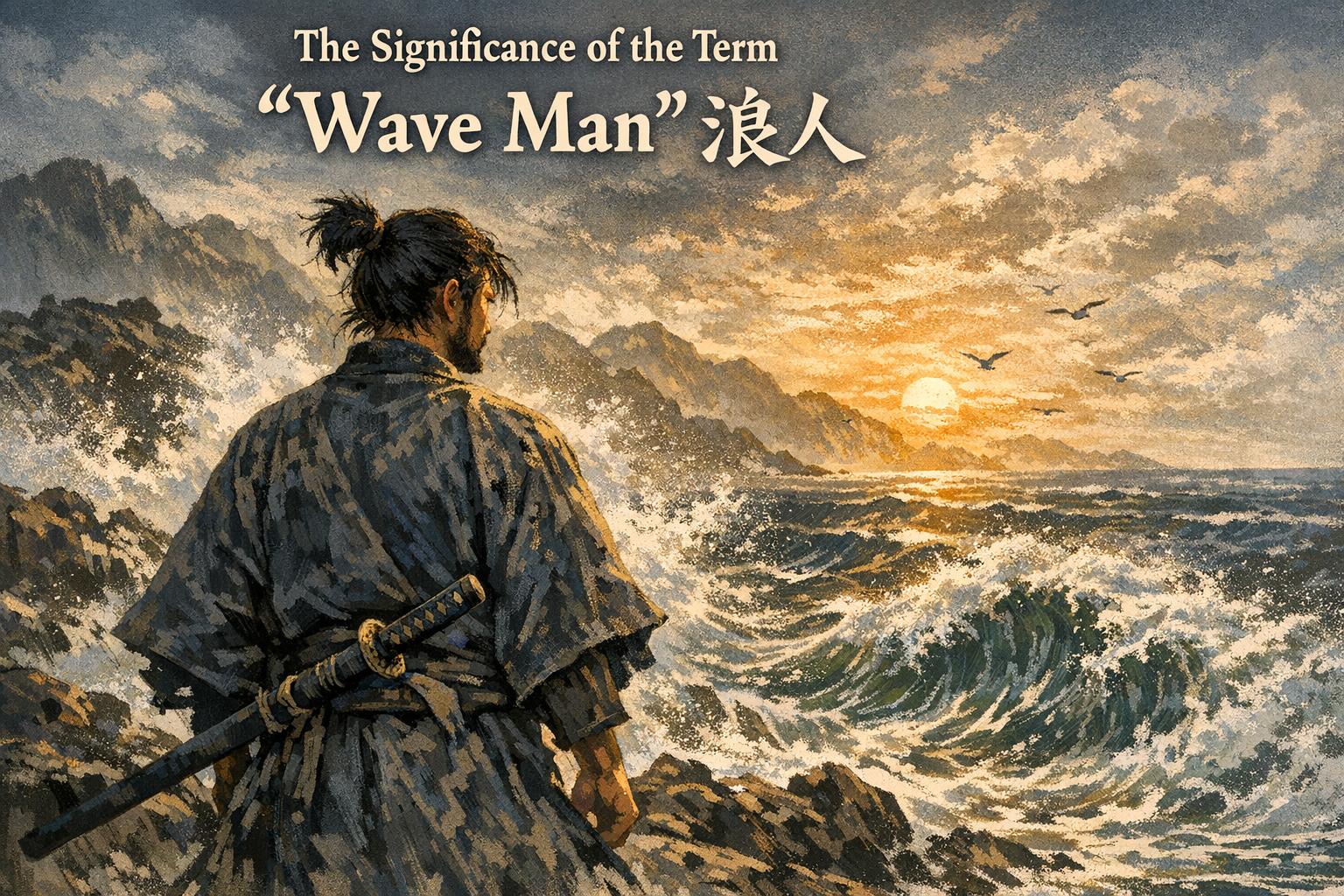
The Significance of the Term “Wave Man” (浪人)

Introduction to “Wave Man” (浪人)

The term “Wave Man” or “Rōnin” (浪人) is rooted in Japanese culture and carries a profound significance that extends back to feudal Japan. This term has evolved over the centuries, representing a samurai without a lord or master during the Japanese feudal period (1185-1868). The translation of “rōnin” as “wave man” is poetically symbolic, depicting someone who is adrift, akin to the unpredictable path of a wave in the vast sea.

Historical Context

The concept of a rōnin emerged from the unique societal and military structures of feudal Japan. Samurai were esteemed as the warrior class, bound by a strict moral and ethical code known as Bushido. This code emphasized loyalty, honor, and discipline, wherein failing to uphold these virtues, often through the loss of a master, led to social disgrace. Following the death of their lord or the breakdown of traditional allegiances, a samurai was expected to commit seppuku, a ritualistic suicide, to retain honor posthumously. However, not all samurai adhered to this extreme measure, either by choice or due to circumstances, thus becoming a rōnin.

Economics and Politics

The late Sengoku and early Edo periods were times of significant turmoil and transition, characterized by changing power dynamics and economic challenges. The end of the Sengoku era, in particular, saw the unification of Japan under the Tokugawa shogunate, which altered the feudal landscape drastically. Many lords lost their domains, leading to the disbandment of their samurai retainers. Without a master, these samurai became rōnin, living in a society that no longer provided the structured support system once guaranteed by their feudal roles.

Role in Society

The societal status of a rōnin was a double-edged sword. On one hand, they faced distrust and social limitations due to their lack of allegiance or steady occupation. Having lost their positions and often their incomes, they encountered considerable hardships. On the other hand, the rōnin were free from the rigid structures that constrained their peers, allowing for diverse avenues to reinvent themselves. As mercenaries, they offered their martial skills for hire, while others became educators, sharing their knowledge of martial arts and cultural practices. Some turned to roles as bodyguards or embarked on spiritual quests, contributing subtly but significantly to the socio-economic developments of their era.

Rōnin in Popular Culture

Throughout Japanese history and beyond, the narrative of the rōnin has been a compelling muse, inspiring works across various media. One seminal tale is that of the “Chūshingura,” or the story of the Forty-seven Rōnin. This narrative encapsulates the enduring themes of loyalty, sacrifice, and the struggle between personal ethics and societal rules. It is a reflection on the rōnin’s quest for justice and a retelling of how these warriors orchestrated a well-planned act of vengeance against the man who dishonored their deceased master. Such stories have cemented their place in kabuki theater, literature, and film, where the rōnin often embody the ideals of honor and integrity, framing the warriors as principled yet complex figures.

Beyond traditional storytelling, the storytelling motif of the lone warrior resonates with broader themes in global media. Modern films and literature continue to draw on the archetypal image of the rōnin, with adaptations and reimaginations portraying characters that navigate moral ambiguities, struggle against oppression, or simply seek personal growth and affirmation.

The Modern Interpretation of “Wave Man”

In today’s world, the term “rōnin” has undergone a transformation, extending beyond historical implications to describe individuals navigating transitional phases of life. In contemporary Japan, for instance, students taking a gap year between high school and university—those still determining their future paths—are colloquially referred to as rōnin. This modern usage highlights the universal and timeless relevance of the term, epitomizing people in search of new beginnings or directions.

The romanticized vision of a rōnin persists as an emblem of freedom and independence, capturing the imagination of those who value autonomy and resilience. It portrays the journey of individuals who, despite being adrift, possess the initiative and courage to forge their own destinies, much like the historic warriors from which the term originated.

Understanding the depth of the term “rōnin” provides a window into not only the past experiences of these masterless samurai but also their cultural impact that reverberates through time. This historical concept echoes today in narratives around personal liberty and the pursuit of purpose, inviting a broader audience to reflect on the balance between historical tradition and contemporary evolution.

For those interested in delving further into the histories and cultural significance of the samurai, and the enduring impact of these concepts on modern society, resources such as the Japan Foundation Scholar provide valuable insights. Such studies offer a comprehensive look into the intricate tapestry of Japanese feudal society, the ethical frameworks that directed the samurai’s lives, and the cultural expressions that continue to captivate audiences worldwide.